The Skin-Aging Timeline: What Changes When, and What Actually Helps at Each Stage
Skin aging runs on a knowable schedule — collagen production easing from the mid-twenties, the visible shifts arriving decades later — and the beauty industry monetizes the panic at every stage. The honest timeline: what changes when, what helps at each stage and what’s marketing.

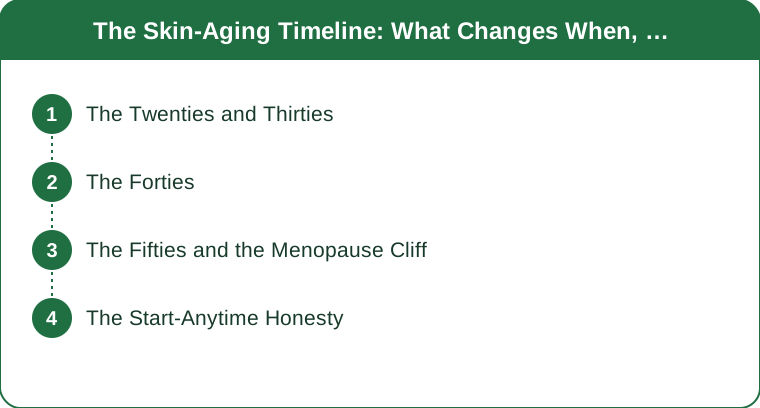
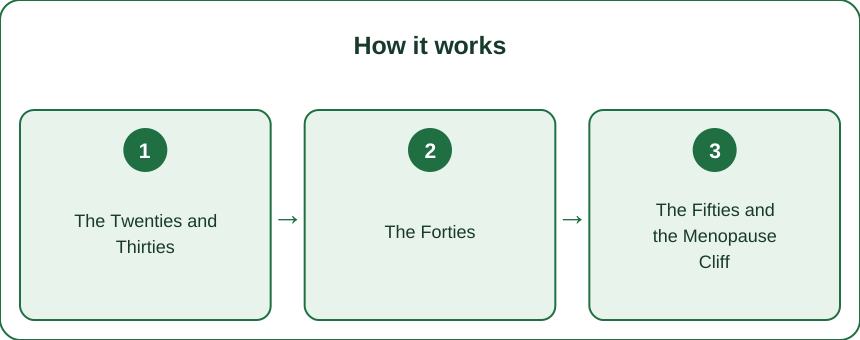
The Twenties and Thirties
The invisible decade(s): collagen production begins its slow decline in the mid-twenties (roughly 1% per year — imperceptible annually, cumulative by forty; the changes are happening but not showing), what actually matters now (SPF daily — the single decision that most determines fifty-year-old skin; the sun does more collagen damage than aging does, and the twenties-thirties sun debt compounds), the worthwhile additions (the retinoid started in the thirties is playing offense early; the moisturizer-and-gentle-cleansing baseline), and the marketing hazard (the ‘anti-aging at 25’ product panic — the prevention that matters is sunscreen and not-smoking; the rest is future-fear monetized).
The Forties
The visible-shift decade: the accumulated sun debt surfaces (the pigmentation and fine lines that were filed decades ago), collagen’s decline steepens toward menopause, and the intervention tier that earns its keep (the retinoid becomes the workhorse — texture and fine-line evidence at its strongest; vitamin C serums for the pigmentation chapter; the SPF religion continues because damage is still bankable), plus the realistic-expectations note (topicals improve texture, tone and fine lines meaningfully — the deeper folds and volume changes are beyond cream’s jurisdiction, whatever the jar promises).

The Fifties and the Menopause Cliff
The steep chapter: the estrogen-collagen connection is dramatic (skin loses a large share of its collagen in the first post-menopause years — the ‘my skin changed overnight’ experience has real physiology), what helps (the retinoid-and-moisture intensification — dryness joins the conversation as estrogen exits; the barrier-repair tier moves from optional to central), the medical-conversation tier (hormone-therapy decisions include skin effects among many factors — a doctor conversation, not a beauty-counter one; the in-office procedures — lasers, microneedling — have real evidence for those who want them), and the strength-training footnote (the fifties-strong muscle work supports the face too — facial fullness sits partly on what’s underneath).
The Start-Anytime Honesty
The timeline’s kindest truth: interventions work at every entry point (the retinoid started at 55 still delivers — the studies enrolled every age; sunscreen started today still prevents tomorrow’s debt), the ranked list never changes (SPF, retinoid, moisture, sleep, not-smoking — the order holds at every decade; everything else is optional refinement), the acceptance-and-agency balance (aging skin is working skin — the goal of a routine is health and your own preference, not a decade-erasure arms race), and the budget wisdom (the evidence-backed basics cost little — the luxury tier mostly buys texture and hope; spend on the SPF you’ll actually wear daily). The timeline was never a countdown — it’s a schedule, and the good interventions are standing appointments.
SPF is the whole first act, retinoids headline the middle, menopause steepens it, starting late still works. Skin ages on a schedule — the evidence-backed basics meet it at every stop.
Keep Reading
This article is for general informational purposes only and is not medical advice. Always consult a qualified health professional for guidance specific to you.