Collagen Supplements vs. Retinol: Do You Need Both, and Which Actually Comes First
Quick Answer: They’re not competing options — retinol works topically to speed cell turnover and stimulate collagen production directly in the skin, while oral collagen supplies building-block amino acids systemically. Most dermatologists consider retinol the better-evidenced single choice if you can only pick one.
You’re standing in the skincare aisle wondering if you’re duplicating effort or missing something by only doing one. The honest answer is they target skin aging through genuinely different mechanisms, and the evidence quality isn’t equal between them.

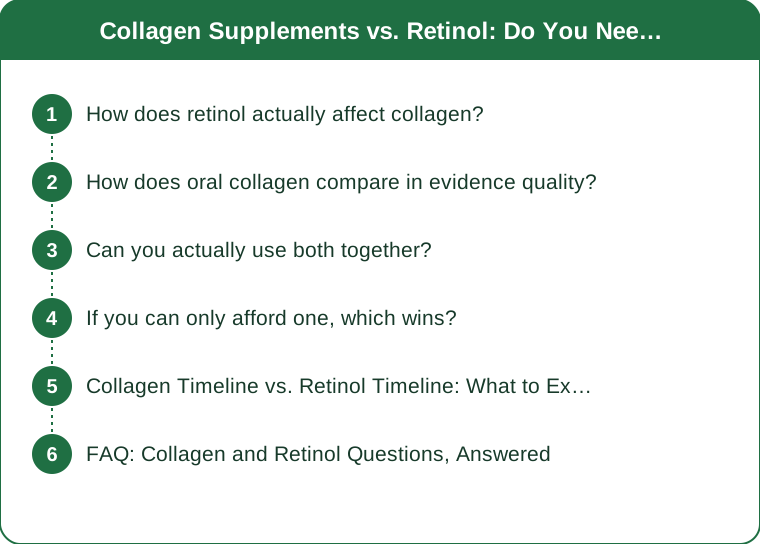
How does retinol actually affect collagen?
Retinol (and stronger retinoids) is one of the most well-studied topical ingredients for stimulating the skin’s own collagen production, backed by decades of clinical research showing measurable improvement in fine lines and texture over 3-6 months of consistent use.
It works locally, directly in the skin layers where collagen is made — a more direct mechanism than anything taken orally can achieve.
How does oral collagen compare in evidence quality?
Oral collagen studies show more modest, more mixed results — some trials show improved skin elasticity and hydration over 8-12 weeks, but the research base is smaller and less consistent than retinol’s, and how much orally-consumed collagen peptides directly reach and rebuild facial skin (versus being broken down like any other protein) is still debated among researchers.
Can you actually use both together?
Yes, and there’s no known conflict — they work through different pathways (topical vs. systemic) and don’t cancel each other out. If budget allows both, many dermatologists see this as reasonable belt-and-suspenders skincare rather than redundant effort.

If you can only afford one, which wins?
Retinol has the stronger, more consistent evidence base for visible skin aging results and is generally the higher-priority single choice if budget or routine complexity forces you to pick. Save collagen supplementation for when retinol is already a consistent part of your routine, not as a substitute for it.
Collagen Timeline vs. Retinol Timeline: What to Expect
Retinol: initial purging/irritation possible in weeks 2-4, visible texture improvement by week 8-12, continued improvement over 6+ months.
Oral collagen: no visible skin change in the first month typically; modest elasticity/hydration improvements reported around the 8-12 week mark in supportive studies, with effects generally requiring continued daily use to maintain.
FAQ: Collagen and Retinol Questions, Answered
Does retinol destroy the collagen you get from supplements?
No — there’s no evidence retinol interferes with collagen from diet or supplements; they operate independently.
Should beginners start both at the same time?
Generally introduce retinol first and alone for the first month to monitor for irritation, then add collagen supplementation separately if desired — this makes it easier to track what’s actually working.
Is prescription-strength retinoid better than over-the-counter retinol for collagen?
Generally yes in clinical studies, though OTC retinol still shows meaningful benefit with less irritation risk — a dermatologist can help match strength to your skin’s tolerance.
TL;DR:
- Retinol works topically and has stronger clinical evidence for visible collagen-related results
- Oral collagen’s evidence is more modest and mixed, working systemically
- They don’t conflict — combining is reasonable if budget allows
- If choosing one, dermatologists generally prioritize retinol first
Keep Reading
This article is for general informational purposes only and is not medical advice. Always consult a qualified health professional for guidance specific to you.