What Actually Matters When Buying a Collagen Supplement (Beyond the Marketing Claims)
Quick Answer: The collagen supplement details that actually matter are: hydrolyzed form (for absorption), a dose of at least 2.5-15g depending on the goal, collagen type matched to your target (Type I/III for skin and hair, Type II for joints), and third-party testing — flashy claims like ‘sourced from exotic animals’ or added trendy ingredients rarely add real benefit.
Walk down any collagen aisle and every label claims to be the best one. Most of those claims are marketing dressing on a handful of factors that actually determine whether a supplement works.

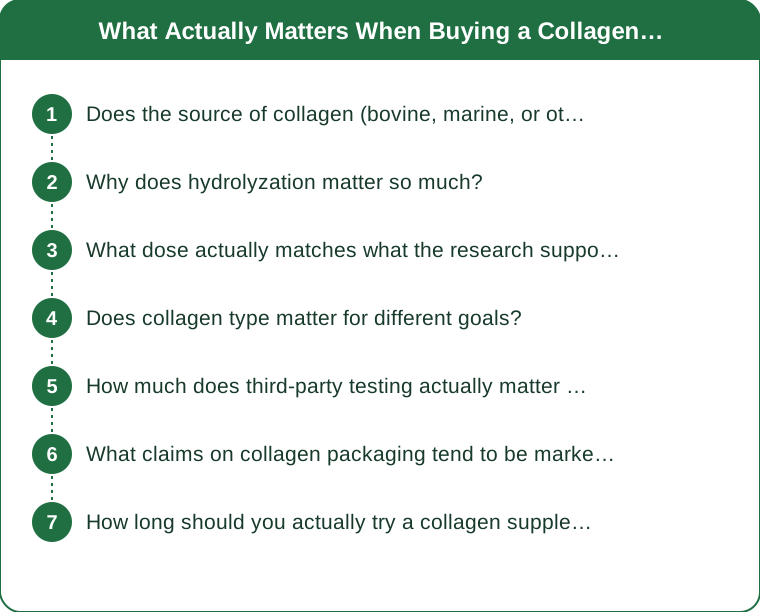
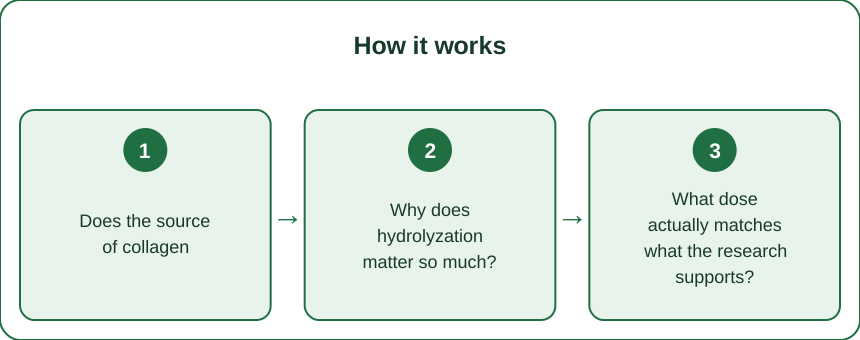
Does the source of collagen (bovine, marine, or other) actually matter?
Source affects amino acid profile slightly and matters for dietary restrictions (marine collagen for pescatarians, for example), but there’s limited evidence that one source is meaningfully more effective than another for general skin or joint benefit at equivalent doses. Choosing based on dietary preference or allergy avoidance is more useful than assuming one source is superior.
Why does hydrolyzation matter so much?
Collagen is a large protein molecule that the body can’t absorb intact — hydrolyzation breaks it down into smaller peptides that are actually absorbable through the gut. A collagen supplement that isn’t hydrolyzed is largely wasted, since intact collagen protein is digested like any other protein rather than delivering the specific peptides research has studied for skin and joint benefit.
What dose actually matches what the research supports?
Studies on skin elasticity and hydration generally use doses in the 2.5-10g range taken daily over 8-12 weeks; studies on joint health tend to use somewhat higher doses, often 10-15g, also over similar timeframes. A product with only 1-2g per serving, common in some gummies and beauty drinks, falls well below the doses actually studied for benefit.

Does collagen type matter for different goals?
Type I and III collagen are the predominant types studied for skin, hair, and nail benefits, since they match the collagen types most abundant in those tissues. Type II collagen is more specifically studied for joint and cartilage support, since it’s the dominant type in cartilage tissue — matching type to your primary goal is more useful than assuming any collagen supplement covers everything equally.
How much does third-party testing actually matter for a supplement like this?
Since supplements aren’t as tightly regulated as pharmaceuticals before going to market, third-party testing (look for certifications like NSF or Informed Sport) verifies that what’s on the label matches what’s actually in the product — this matters more for collagen than it might seem, since dosage claims vary widely and aren’t always independently verified.
What claims on collagen packaging tend to be marketing rather than meaningful?
Terms like ‘triple-sourced,’ added trendy ingredients in trace amounts (a pinch of biotin or a superfood blend) that are too low-dose to matter, and vague ‘clinically studied ingredients’ claims that don’t cite an actual study are common marketing dressing. A clean label with clear dose, hydrolyzed form, and type disclosed is a better sign than an impressively long ingredient list.
How long should you actually try a collagen supplement before judging results?
Most studies showing measurable skin or joint benefit run 8-12 weeks minimum at a consistent daily dose — judging a supplement after two or three weeks is judging it before the timeframe where benefit would realistically appear, even for a genuinely effective product.
TL;DR:
- Hydrolyzed form matters more than source (bovine vs. marine) for actual absorption
- Match dose to the research: 2.5-10g for skin, 10-15g for joints, taken daily
- Match collagen type to your goal — Type I/III for skin and hair, Type II for joints
- Third-party testing verifies label claims are accurate, which isn’t guaranteed for supplements
- Give any product at least 8-12 weeks of consistent use before judging results
Next time you’re comparing options, flip the label over and check dose and hydrolyzed form first — that tells you more than any claim on the front.
Keep Reading
This article is for general informational purposes only and is not medical advice. Always consult a qualified health professional for guidance specific to you.